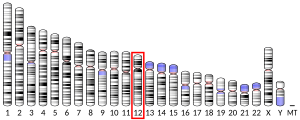
In this article we are going to explore in depth the topic of HOXC5, a topic that has captured the attention of millions of people around the world. From its historical relevance to its impact on modern society, HOXC5 has been the subject of debates and discussions in different areas. Throughout these pages, we will analyze its origins, evolution and its influence on various aspects of daily life. From his manifestations in popular culture to his involvement in political and social issues, HOXC5 has left an indelible mark that deserves to be explored in detail. In addition, we will address the different perspectives and opinions about HOXC5, in order to offer a comprehensive and complete vision of this phenomenon.
Protein-coding gene in the species Homo sapiens
| HOXC5 |
| Identifiers |
| Aliases |
HOXC5, CP11, HOX3, HOX3D, homeobox C5 |
| External IDs |
OMIM: 142973; MGI: 96196; HomoloGene: 41296; GeneCards: HOXC5; OMA:HOXC5 — orthologs |
|
|
|
|
| RNA expression pattern |
| Bgee |
| Human |
Mouse (ortholog) |
| Top expressed in |
- gonad
- left uterine tube
- right ovary
- right uterine tube
- left ovary
- fundus
- body of stomach
- granulocyte
- popliteal artery
- tibial arteries
|
|
| Top expressed in |
- thoracic vertebral column
- tail of embryo
- superior cervical ganglion
- urethra
- male urethra
- esophagus
- genital tubercle
- neural tube
- embryo
- paraxial mesoderm
|
|
| More reference expression data |
|
| BioGPS |
| More reference expression data |
|
|
| Gene ontology |
| Molecular function |
- DNA-binding transcription factor activity
- sequence-specific DNA binding
- DNA binding
- DNA-binding transcription factor activity, RNA polymerase II-specific
- RNA polymerase II cis-regulatory region sequence-specific DNA binding
- DNA-binding transcription activator activity, RNA polymerase II-specific
- transcription factor activity, RNA polymerase II distal enhancer sequence-specific binding
|
| Cellular component |
- cell junction
- nucleus
- nucleoplasm
|
| Biological process |
- regulation of transcription by RNA polymerase II
- multicellular organism development
- regulation of transcription, DNA-templated
- transcription, DNA-templated
- anterior/posterior pattern specification
- embryonic skeletal system development
- positive regulation of transcription by RNA polymerase II
|
| Sources:Amigo / QuickGO |
|
|
|
| Wikidata |
| View/Edit Human |
View/Edit Mouse |
|
Homeobox protein Hox-C5 is a protein that in humans is encoded by the HOXC5 gene.[5][6][7]
Function
This gene belongs to the homeobox family of genes. The homeobox genes encode a highly conserved family of transcription factors that play an important role in morphogenesis in all multicellular organisms. Mammals possess four similar homeobox gene clusters, HOXA, HOXB, HOXC and HOXD, which are located on different chromosomes and consist of 9 to 11 genes arranged in tandem. This gene, HOXC5, is one of several homeobox HOXC genes located in a cluster on chromosome 12. Three genes, HOXC5, HOXC4 and HOXC6, share a 5′ non-coding exon. Transcripts may include the shared exon spliced to the gene-specific exons, or they may include only the gene-specific exons. Two alternatively spliced variants have been described for HOXC5. The transcript variant which includes the shared exon apparently doesn’t encode a protein. The protein-coding transcript variant contains gene-specific exons only.[7]
References
- ^ a b c GRCh38: Ensembl release 89: ENSG00000172789 – Ensembl, May 2017
- ^ a b c GRCm38: Ensembl release 89: ENSMUSG00000022485 – Ensembl, May 2017
- ^ «Human PubMed Reference:». National Center for Biotechnology Information, U.S. National Library of Medicine.
- ^
- ^
- ^ Scott MP (Nov 1992). «Vertebrate homeobox gene nomenclature». Cell. 71 (4): 551–3. doi:10.1016/0092-8674(92)90588-4. PMID 1358459. S2CID 13370372.
- ^ a b «Entrez Gene: HOXC5 homeobox C5».
Further reading
- Arcioni L, Simeone A, Guazzi S, Zappavigna V, Boncinelli E, Mavilio F (Jan 1992). «The upstream region of the human homeobox gene HOX3D is a target for regulation by retinoic acid and HOX homeoproteins». The EMBO Journal. 11 (1): 265–77. doi:10.1002/j.1460-2075.1992.tb05049.x. PMC 556447. PMID 1346761.
- Acampora D, D’Esposito M, Faiella A, Pannese M, Migliaccio E, Morelli F, Stornaiuolo A, Nigro V, Simeone A, Boncinelli E (Dec 1989). «The human HOX gene family». Nucleic Acids Research. 17 (24): 10385–402. doi:10.1093/nar/17.24.10385. PMC 335308. PMID 2574852.
- Boncinelli E, Acampora D, Pannese M, D’Esposito M, Somma R, Gaudino G, Stornaiuolo A, Cafiero M, Faiella A, Simeone A (1990). «Organization of human class I homeobox genes». Genome. 31 (2): 745–56. doi:10.1139/g89-133. PMID 2576652.
- Rabin M, Ferguson-Smith A, Hart CP, Ruddle FH (Dec 1986). «Cognate homeo-box loci mapped on homologous human and mouse chromosomes». Proceedings of the National Academy of Sciences of the United States of America. 83 (23): 9104–8. Bibcode:1986PNAS…83.9104R. doi:10.1073/pnas.83.23.9104. PMC 387083. PMID 2878432.
- Simeone A, Pannese M, Acampora D, D’Esposito M, Boncinelli E (Jun 1988). «At least three human homeoboxes on chromosome 12 belong to the same transcription unit». Nucleic Acids Research. 16 (12): 5379–90. doi:10.1093/nar/16.12.5379. PMC 336773. PMID 2898768.
- Guazzi S, Lonigro R, Pintonello L, Boncinelli E, Di Lauro R, Mavilio F (Jul 1994). «The thyroid transcription factor-1 gene is a candidate target for regulation by Hox proteins». The EMBO Journal. 13 (14): 3339–47. doi:10.1002/j.1460-2075.1994.tb06636.x. PMC 395231. PMID 7913891.
- Apiou F, Flagiello D, Cillo C, Malfoy B, Poupon MF, Dutrillaux B (1996). «Fine mapping of human HOX gene clusters». Cytogenetics and Cell Genetics. 73 (1–2): 114–5. doi:10.1159/000134320. PMID 8646877.
- Kosaki K, Kosaki R, Suzuki T, Yoshihashi H, Takahashi T, Sasaki K, Tomita M, McGinnis W, Matsuo N (Feb 2002). «Complete mutation analysis panel of the 39 human HOX genes». Teratology. 65 (2): 50–62. doi:10.1002/tera.10009. PMID 11857506.
External links
This article incorporates text from the United States National Library of Medicine, which is in the public domain.