In this article, we will explore the fascinating world of Portal:Politics. From its origin to its evolution over time, we will delve into its meaning, its importance and its impact on today’s society. We will analyze its different facets, from its relevance in the scientific field to its influence on popular culture. Through a multidisciplinary approach, we will highlight the diverse perspectives that exist around Portal:Politics, offering a comprehensive and enriching vision. Thus, we will discover how Portal:Politics has marked a milestone in history and remains a topic of study and debate today.
 |
Portal maintenance status: (June 2018)
Please take care when editing, especially if using automated editing software. Learn how to update the maintenance information here. |
| Main | Topics and categories | Tasks and projects |
The Politics portal
Politics (from Ancient Greek πολιτικά (politiká) ‘affairs of the cities’) is the set of activities that are associated with making decisions in groups, or other forms of power relations among individuals, such as the distribution of status or resources.
The branch of social science that studies politics and government is referred to as political science.
Politics may be used positively in the context of a «political solution» which is compromising and non-violent, or descriptively as «the art or science of government», but the word often also carries a negative connotation. The concept has been defined in various ways, and different approaches have fundamentally differing views on whether it should be used extensively or in a limited way, empirically or normatively, and on whether conflict or co-operation is more essential to it.
A variety of methods are deployed in politics, which include promoting one’s own political views among people, negotiation with other political subjects, making laws, and exercising internal and external force, including warfare against adversaries. Politics is exercised on a wide range of social levels, from clans and tribes of traditional societies, through modern local governments, companies and institutions up to sovereign states, to the international level.
In modern nation states, people often form political parties to represent their ideas. Members of a party often agree to take the same position on many issues and agree to support the same changes to law and the same leaders. An election is usually a competition between different parties.
A political system is a framework which defines acceptable political methods within a society. The history of political thought can be traced back to early antiquity, with seminal works such as Plato‘s Republic, Aristotle‘s Politics, Confucius‘s political manuscripts and Chanakya‘s Arthashastra. (Full article…)
Selected article

The Second Malaysia Plan was an economic development plan set out by the government of Malaysia, with the goal of implementing the aims of the New Economic Policy. It aimed to «restructure» Malaysian society and overturn Chinese Malaysian and foreign hegemony in the economy of Malaysia so that the Malays would not be disadvantaged economically. Although the First Malaysia Plan had also set out to tackle the problem of poverty, especially among the Malays, it had not been very successful, and may have been a factor in the May 13 Incident when racial rioting broke out in Kuala Lumpur. The Second Malaysia Plan was regarded by some as excessive in its zeal to increase Malay participation in the economy, and the government accordingly scaled back the emphasis on restructuring the economy when the plan ended.
Featured picture

Photo taken by a Lockheed U-2 spy plane of the San Cristobal MRBM launch site in Cuba, November 1962, after the Cuban Missile Crisis. Although this image was taken days after the crisis had ended (October 28), this image has become iconic of the crisis to the point where it is often cited incorrectly as having been taken during the crisis.
 Featured lists —

-
 Image 1Canada is a federation that comprises ten provinces and three territories. Its government is structured as a constitutional monarchy and a parliamentary democracy, with a monarch as its sovereign and a Prime Minister as its head of government. Each of the country’s provinces and territories also has a head of government, called premier in English. Collectively, the federal Prime Minister and provincial and territorial premiers are referred to as first ministers. In French, the term premier ministre is used in both the federal and provincial/territorial contexts.
The longest-serving current first minister is Prime Minister Justin Trudeau, who assumed office on November 4, 2015; the newest first minister is Susan Holt of New Brunswick, who assumed office on November 2, 2024. The oldest first minister, François Legault of Quebec, is 67; the youngest first minister, P.J. Akeeagok of Nunavut, is 40. Of the current first ministers, two (Danielle Smith of Alberta and Susan Holt of New Brunswick) are women and three (P.J. Akeeagok of Nunavut, Wab Kinew of Manitoba, and R.J. Simpson of the Northwest Territories) are Indigenous. (Full article…)
-
Image 2
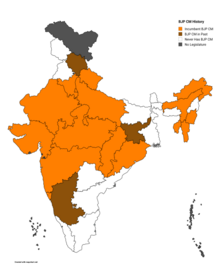
2025 BJP CM History The Bharatiya Janata Party (BJP) is one of the two major parties in the political system of the Republic of India, the other being the Indian National Congress (INC). As of 2015, it is the country’s largest political party in terms of representation in the national parliament. Established in 1980, the BJP’s platform is generally considered as the right-wing of the political spectrum. As of 13 June 2024, 54 BJP leaders have held the position of a chief minister out of which thirteen are incumbent.
A chief minister is the head of government of each of the twenty-eight states and two union territories (UTs) (Delhi and Puducherry). According to the Constitution of India, at the state-level, the governor is de jure head, but de facto executive authority rests with the chief minister. Following elections to the state legislative assembly, the governor usually invites the party (or coalition) with a majority of seats to form the government. The governor appoints the chief minister, whose council of ministers are collectively responsible to the assembly. The chief minister’s term is usually for a maximum of five years, with the confidence of the assembly’s confidence. There are no limits to the number of terms the chief minister can serve. (Full article…) -
Image 3
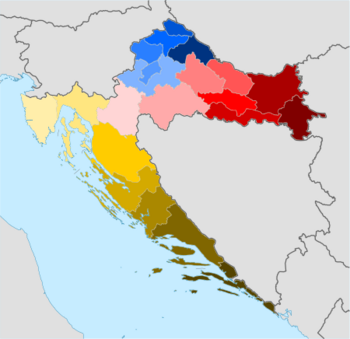
Counties of Croatia: Bjelovar-Bilogora Brod-Posavina Dubrovnik-Neretva Istria Karlovac Koprivnica-Križevci Krapina-Zagorje Lika-Senj Međimurje Osijek-Baranja Požega-Slavonia Primorje-Gorski Kotar Šibenik-Knin Sisak-Moslavina Split-Dalmatia Varaždin Virovitica-Podravina Vukovar-Srijem Zadar City of Zagreb Zagreb County The counties of Croatia (Croatian: hrvatske županije) are the first-level administrative subdivisions of the Republic of Croatia. Since they were re-established in 1992, Croatia has been divided into 20 counties and the capital city of Zagreb, which has the authority and legal status of both a county and a city (separate from the surrounding Zagreb County). As of 2015, the counties are subdivided into 128 cities and 428 (mostly rural) municipalities. The divisions have changed over time since the medieval Croatian state. They reflected territorial losses and expansions; changes in the political status of Dalmatia, Dubrovnik and Istria; and political circumstances, including the personal union and subsequent development of relations between the Kingdom of Croatia-Slavonia and the Kingdom of Hungary. (Full article…)
-
Image 4
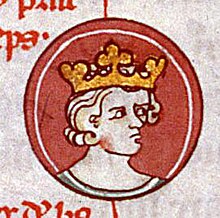
France was ruled by monarchs from the establishment of the kingdom of West Francia in 843 until the end of the Second French Empire in 1870, with several interruptions.
Classical French historiography usually regards Clovis I, king of the Franks (r. 507–511), as the first king of France. However, historians today consider that such a kingdom did not begin until the establishment of West Francia, after the fragmentation of the Carolingian Empire in the 9th century. (Full article…)
-
Image 5
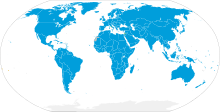
The member states of the United Nations comprise 193 sovereign states. The United Nations (UN) is the world’s largest intergovernmental organization. All members have equal representation in the UN General Assembly.
The Charter of the United Nations defines the rules for admission of member states. Membership is open to all states which accept certain terms of the charter and are able to carry them out. New members must be recommended by the United Nations Security Council. In addition to the member states, the UN also invites non-member states to be observer states at the UN General Assembly. A member state that has persistently violated the principles of the United Nations Charter can be expelled from the United Nations. (Full article…)
-
Image 6The seven members of the Swiss Federal Council (German: Schweizerischer Bundesrat; French: Conseil fédéral suisse; Italian: Consiglio federale svizzero; Romansh: Cussegl federal svizzer) constitute the federal government of Switzerland and collectively serve as the country’s head of state. Each of the seven Federal Councillors heads a department of the Swiss federal administration.
The current Swiss Federal Councillors are: Guy Parmelin (first elected in 2015), Ignazio Cassis (first elected in 2017), Viola Amherd (first elected in 2018), Karin Keller-Sutter (first elected in 2018), Albert Rösti (first elected in 2022), Élisabeth Baume-Schneider (first elected in 2022), and Beat Jans (first elected in 2023) (Full article…)
-
Image 7
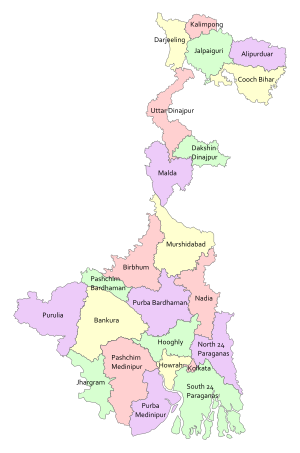
Districts of West Bengal The Himalayas lies in the north of West Bengal and the Bay of Bengal is at the south. Between them, the river Ganga flows eastwards and its main distributary, the Hooghly River, flows south to reach the Bay of Bengal. The Siliguri Corridor, which connects North-East India with rest of the India, lies in the North Bengal region of the state. Geographically, West Bengal is divided into a variety of regions—Darjeeling Himalayan hill region, Terai and Dooars region, North Bengal plains, Rarh region, Western plateau and high lands, coastal plains, Sundarbans and the Ganga Delta.
In 1947, when India gained independence, the state of West Bengal was formed, with 14 districts, as per partition plan of the then Bengal province of British India. The former princely state Koch Bihar joined as a district on 26 January 1950, and the former French enclave Chandannagore joined as part of the Hooghly district in 1954. The States Reorganisation Act of 1956 led to addition of Purulia district to the state and to enlargement of West Dinajpur district. Later, larger districts such as West Dinajpur, 24 Parganas and Midnapore were bifurcated. (Full article…)
-
Image 8
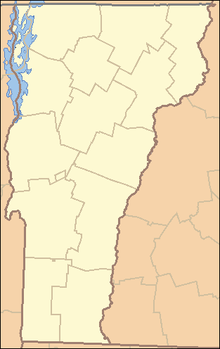
There are fourteen counties in the U.S. state of Vermont. These counties together contain 255 political units, or places, including 237 towns, 10 cities, 5 unincorporated areas, and 4 gores. Each county has a county seat, often referred to as a «shire town.»
In 1779, Vermont had two counties. The western side of the state was Bennington County and the eastern was Cumberland County. In 1781, three new counties (including then-called Washington that became part of New Hampshire) were created out of Cumberland County, and the remainder of the county was renamed Windham.
Today’s Washington County was created in 1810 as Jefferson County; it was renamed Washington in 1814. (Full article…) -
Image 9
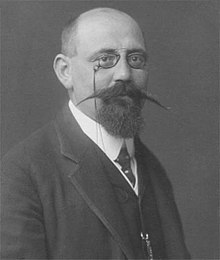
The chancellor of Austria is the head of government of Austria, appointed by the president and viewed as the country’s de facto chief executive. The chancellor chairs and leads the Cabinet, which also includes the vice-chancellor and the ministers.
Following World War I, the office was established by the Provisional National Assembly on 30 October 1918 and named state chancellor of the Republic of German-Austria, and its first holder, Karl Renner, was appointed by the State Council. After the Allied powers forbade German-Austria to merge with the Weimar Republic, the country formed the federal First Austrian Republic and the office was renamed from state chancellor to federal chancellor. The first federal chancellor was Michael Mayr. Ten chancellors served under the First Republic until Chancellor Engelbert Dollfuss created the authoritarian and dictatorial Federal State of Austria. Following Dollfuss’s assassination by Austrian National Socialists, Kurt Schuschnigg succeeded him as chancellor and upheld the dictatorship. Schuschnigg was replaced by Arthur Seyss-Inquart, a Nazi caretaker who held the office for two days, until Austria was annexed into Nazi Germany. (Full article…)
-
Image 10
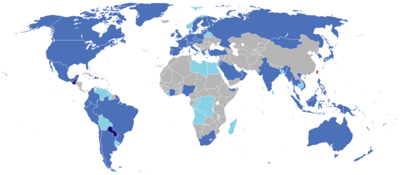
Map of countries and territories with Taiwanese diplomatic missions Has formal embassyHas unofficial representative missionsFormerly had unofficial missionsTaiwan, officially the Republic of China, has 112 diplomatic missions across the world as of January 2024. Due to the One-China policy held by the People’s Republic of China on the Chinese mainland, other states are only allowed to maintain relations with one of the two countries. As most countries have changed their recognition to the latter over time, only 13 of Taiwan’s diplomatic missions have official status, consisting of twelve embassies and one consulate-general. This makes Taiwan one of the few countries in the world that has resident embassies in all of the states with which it has formal diplomatic relations.
Despite these barriers, 59 United Nations members maintain relations with Taiwan on an unofficial basis. In addition, Taiwan has informal relations with Somaliland, a state that is not internationally recognized by any other country, including China. To serve these locations and other places throughout the world, 92 semi-official representative offices are utilized for matters that would otherwise be handled by embassies or consulates. Their heads are still appointed by the Ministry of Foreign Affairs, making them de facto missions. Owing to pressure from the People’s Republic, most of these offices cannot operate under either the country’s official or common name, using the name of the capital Taipei instead to avoid addressing Taiwan’s political status. There have recently been two notable exceptions to this; the offices in Somaliland (opened 2020) and Lithuania (2021) use «Taiwan» in their names. Taiwan also maintains permanent missions to the European Union and the World Trade Organization, with the latter under the name «Separate Customs Territory of Taiwan, Penghu, Kimmen and Matsu«. (Full article…)
-
Image 11
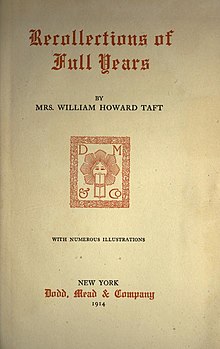
Title page of Recollections of Full Years by Helen Taft Fourteen first ladies of the United States have written a total of twenty-three memoirs. The first lady is the hostess of the White House, and the position is traditionally filled by the wife of the president of the United States, with some historical exceptions. Every memoir by a first lady published in the 20th and 21st centuries has been a bestseller, at times outselling those of their presidential husbands.
In the early 1800s, Abigail Adams had her correspondence published as Letters of Mrs. Adams, the Wife of John Adams, and Louisa Adams «made several attempts at an autobiography», though she never sought to publish them. The Memoirs and Letters of Dolley Madison, Wife of James Madison, President of the United States were published in 1886 but were actually edited by Lucia Cutts and written by Dolley Madison‘s niece Mary Cutts. (Full article…)
-
Image 12
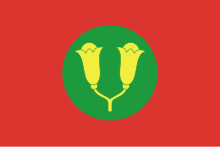 Sultanate flag
The sultans of Zanzibar (Arabic: سلاطين زنجبار; Swahili: Sultani wa Zanzibar) were the rulers of the Sultanate of Zanzibar, which was created on 19 October 1856 after the death of Said bin Sultan. He had ruled Oman and Zanzibar as the sultan of Oman since 1804. The sultans of Zanzibar were of a cadet branch of the Al Said Dynasty of Oman.
In 1698, Zanzibar became part of the overseas holdings of Oman, falling under the control of the sultan of Oman. Omani and other Arab traders had already been prominent in trade with the island for hundreds of years. It was also visited by traders from Persia and India, who arrived with the seasonal musim (west wind). Months later they could return east with a change in the wind. (Full article…)
-
Image 13The five counties of Hawaii on the Hawaiian Islands enjoy somewhat greater status than many counties on the United States mainland. Counties in Hawaii are the only legally constituted government bodies below that of the state. No formal level of government (such as city governments) exists below that of the county in Hawaii.
Unlike the other 49 states, Hawaii does not delegate educational responsibility to local school boards; public education is carried out by the Hawaii State Department of Education. Hawaiian counties collect property taxes and user fees in order to support road maintenance, community activities, parks (including life guards at beach parks), garbage collection, police (the state police force, called the Hawaii Department of Public Safety, is limited in scope), ambulance, and fire suppression services. (Full article…)
-
Image 14
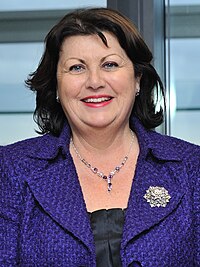
Máire Geoghegan-Quinn, who in 1979 became the first woman in an Irish cabinet since 1921 The Government of Ireland is the cabinet that exercises executive authority in the Republic of Ireland. Its ministers are collectively responsible for the Departments of State administered by the members of the Government.
As of 2025, twenty-three women have served as cabinet ministers in governments of the Republic of Ireland and its predecessors the Irish Free State (1922–1937) and the Irish Republic (1919–1922). After a 58-year gap between the first and second women ministers, there has been at least one woman in all cabinets since December 1982. No woman has ever been Taoiseach (prime minister), but four women have served as Tánaiste (deputy prime minister). (Full article…) -
Image 15Below is a list of the premiers of the province of Ontario, Canada, since Confederation in 1867. Ontario uses a unicameral Westminster-style parliamentary government, in which the premier is the leader of the party that controls the most seats in the Legislative Assembly. The premier is Ontario’s head of government. The premier picks a cabinet from the elected members to form the Executive Council of Ontario, and presides over that body.
Members are first elected to the legislature during general elections. General elections must be conducted every four years from the date of the last election. An election may also happen if the Governing party loses the confidence of the legislature, by the defeat of a supply bill or tabling of a confidence motion. (Full article…)


.svg)


.jpg)
.svg)
.jpg)
Selected quote

Selected biography

Edmund Burke PC (12 January 1729– 9 July 1797) was an Irish statesman, author, orator, political theorist and philosopher who, after moving to England, served for many years in the House of Commons of Great Britain as a member of the Whig party. He is mainly remembered for his support of the cause of the American Revolutionaries, and for his later opposition to the French Revolution. The latter led to his becoming the leading figure within the conservative faction of the Whig party, which he dubbed the «Old Whigs», in opposition to the pro–French Revolution «New Whigs», led by Charles James Fox. Burke was praised by both conservatives and liberals in the 19th century. Since the 20th century, he has generally been viewed as the philosophical founder of modern Conservatism, as well as a representative of classical liberalism.
Did you know (auto-generated) —

- … that in addition to having been a centre for local involvement in Chinese politics, the Kuomintang Building in Vancouver has hosted social events including a wedding reception?
- … that following the Russian invasion of Ukraine, a diverse group of exiled Russian public figures formed the Anti-War Committee of Russia to unite different political movements to oppose the war?
- … that Dmitri Shostakovich denounced his own Tahiti Trot, an orchestral arrangement of «Tea for Two«, as a political blunder?
- … that Disney once created a political advertisement for Dwight D. Eisenhower (featured)?
- … that although he was a former Indonesian prime minister, Soekiman Wirjosandjojo was not arrested during a political purge as he was considered a non-threat?
- … that nearing the end of his tenure as mayor of Tegal, Indonesia, Adi Winarso took part in a talkshow with his former political competitors?
More did you know…

- …that the first phase of Mitt Romney’s 2012 U.S. presidential campaign was announced via a video message?
- …that Matt Taibbi‘s book Griftopia has been described as a «necessary … corrective» to the assertion that bubbles are an inevitable part of the market economy?
- …that in the book Net.wars, author Wendy M. Grossman attributes Internet conflict in the 1990s to culture shock from an influx of users?
- …that former California Assembly Republican Leader and California Republican Party Chair Robert W. Naylor was editor of The Stanford Daily while he was a student at Stanford University?
- …that the Brown Dog affair, an Edwardian era vivisection controversy, led to massive riots?
- …that when the Tennessee Center for Policy Research, a «free-market think tank,» criticized Al Gore‘s energy use, CNN mistakenly called the organization an environmental group?
In this month
- February 4, 2003 – Yugoslavia was renamed to Serbia and Montenegro converting the federal republic to a looser union.
- February 6, 1911 – Ronald Reagan, 40th President of the United States, was born.
- February 16, 2005 – In the United States, the school board in Staunton, Virginia voted to continue classes in Weekday Religious Education. This was a milestone in the issue of Separation of church and state in the United States.
- February 20, 2005 – Spain approves the European Constitution in a consultative referendum, though with a low turnout of 42%.
News and Current events

- August 11: 4 local government areas in New South Wales, Australia locked down after COVID-19 case
- August 11: Australia: AstraZeneca vaccine access expanded by Victorian government
- August 1: Australia: Victorian lockdown lifted
- July 29: Tunisia’s president dismisses prime minister, suspends parliament
- July 25: Australia: Wikinews interviews Reg Kidd, mayor of the City of Orange, about COVID-19 lockdown and local government
- July 23: South Australia enters week-long lockdown to contain COVID-19 Delta variant spread
- July 21: Technological University Dublin senior lecturer Dr Lorcan Sirr speaks to Wikinews on housing market in Ireland
- July 21: Three rural councils in New South Wales, Australia enter 7-day lockdown
- July 21: Australia: Victoria lockdown extended by a week with 85 active cases recorded
- July 15: California governor signs new state budget, eligible Californians to get stimulus payments
Topics and categories
General images
-
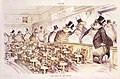 Image 1Reformers like the American Joseph Keppler depicted the Senate as controlled by the giant moneybags, who represented the nation’s financial trusts and monopolies. (from Political corruption)
 -
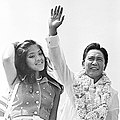 Image 2Ferdinand Marcos (pictured with his daughter Imee) was a Philippine dictator and kleptocrat. His regime was infamous for its corruption. (from Political corruption)
 -
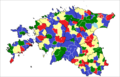 Image 3This is the divide of the different political parties in Estonia where in the 2013 elections, over 133,000 people (roughly 21.2% of participating voters) voted over the Internet. The 2013 elections were also the first elections to allow vote verification with mobile devices. (from Politics and technology)
 -
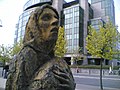 Image 4A memorial to the Great Famine (Ireland), a famine event in Ireland that faced elongated suffering from the UK’s domestic policy failures at the time under the Prime Ministers Sir Robert Peel and Lord John Russell. (from Health politics)
 -
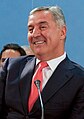 Image 5Montenegro’s president Milo Đukanović is often described as having strong links to Montenegrin mafia. (from Political corruption)
 -
 Image 6The logo and slogan for change.org (from Politics and technology)
 -
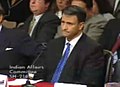 Image 7American lobbyist and businessman Jack Abramoff was at the center of an extensive corruption investigation. (from Political corruption)
 -
 Image 8Blockchain technology has created cryptocurrencies similarly to voting tokens seen in blockchain voting platforms, with recognizable names including Bitcoin and Ethereum. (from Politics and technology)
 -
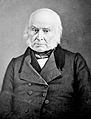 Image 9The sixth president of the United States, John Quincy Adams‘ «corrupt bargain» of 1824 is an example of patronage. (from Political corruption)
 -
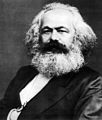 Image 10Karl Marx and his theory of Communism, developed with Friedrich Engels, proved to be one of the most influential political ideologies of the 20th century. (from History of political thought)
 -
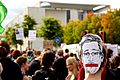 Image 11Protesters in support of American whistleblower Edward Snowden, Berlin, Germany, 30 August 2014 (from Political corruption)
 -
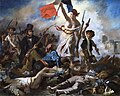 Image 12Eugène Delacroix’s Liberty Leading the People (1830, Louvre), a painting created at a time where old and modern political philosophies came into violent conflict. (from History of political thought)
 -
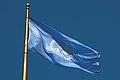 Image 13The Flag of the United Nations flying at United Nations Plaza in the Civic Center, San Francisco, California. The UN is one of the key organizations in the process of the political globalization. (from Political globalization)
 -
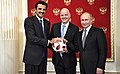 Image 14Russia handing over the symbolic relay baton for the hosting rights of the 2022 FIFA World Cup to Qatar in June 2018 (from Political corruption)
 -
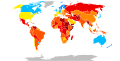 } (from Political corruption)
 -
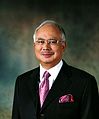 Image 16Malaysia’s former Prime Minister Najib Razak was found guilty in the corruption trial over the multi-billion-dollar 1MDB scandal. He is currently serving his sentence in Kajang Prison. (from Political corruption)
 -
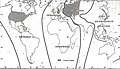
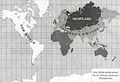 Image 17World map with the concepts of Heartland and Rimland applied (from Geopolitics)
 -
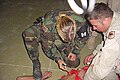 Image 18US Military Police officer restraining and sedating prisoner while a soldier holds him down (from Political corruption)
 -
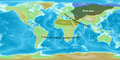 Image 19Sir Halford Mackinder’s Heartland concept showing the situation of the «pivot area» established in the Theory of the Heartland. He later revised it to mark Northern Eurasia as a pivot while keeping area marked above as Heartland. (from Geopolitics)
 -
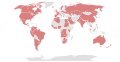 Image 20Countries with politicians, public officials or close associates implicated in the Panama Papers leak on April 15, 2016 (from Political corruption)
 -
-
-
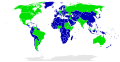 Image 23A world map distinguishing countries of the world as federations (green) from unitary states (blue), a work of political science (from Political science)
 -
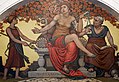 Image 24Detail from Corrupt Legislation (1896) by Elihu Vedder. Library of Congress Thomas Jefferson Building, Washington, D.C. (from Political corruption)
 -
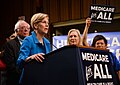 Image 25Elizabeth Warren and Bernie Sanders campaigning for extended US Medicare coverage in 2017. (from Health politics)
 -
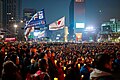 Image 26Candlelight protest against South Korean President Park Geun-hye in Seoul, South Korea, 7 January 2017 (from Political corruption)
 -
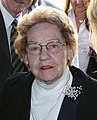 Image 27Savka Dabčević-Kučar, Croatian Spring participant; Europe’s first female prime minister (from Civil and political rights)


_(2).jpg)


.svg)


.jpg)
.jpeg)

Related portals


Associated Wikimedia
The following Wikimedia Foundation sister projects provide more on this subject:
-
 Commons
Free media repository -
 Wikibooks
Free textbooks and manuals -
 Wikidata
Free knowledge base -
 Wikinews
Free-content news -
 Wikiquote
Collection of quotations -
 Wikisource
Free-content library -
 Wikiversity
Free learning tools -
 Wiktionary
Dictionary and thesaurus
Sources
More portals