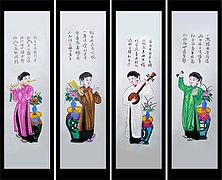
In today’s world, Taoism in Vietnam has become a topic of growing interest and debate in different areas. From politics to science, through culture and society, Taoism in Vietnam has managed to capture the attention of a large number of people around the world. Its implications, its impact and its relevance have generated a wide range of opinions, theories and studies that seek to understand and analyze this phenomenon in depth. In this article, we will explore different aspects related to Taoism in Vietnam, from its origins to its influence today, with the aim of providing a complete and updated vision of this topic that is so relevant today.
Overview of Taoism in Vietnam
| Part of a series on the |
| Culture of Vietnam |
|---|
| History |
| People |
| Languages |
| Traditions |
| Cuisine |
| Festivals |
| Religion |
| Art |
| Literature |
| Music |
| Media |
| Sport |
| Monuments |
| Symbols |

| Part of a series on |
| Taoism |
|---|
| Concepts |
| Practices |
| Texts |
| Theology |
People
|
Schools
|
| Sacred places |
| Institutions and organizations |


Taoism in Vietnam (Vietnamese: Đạo giáo Việt Nam) is believed to have been introduced into the country during the first Chinese domination of Vietnam.[1] Under Lý dynasty Emperor Lý Nhân Tông (1072-1127), the examination for the recruitment of officials consisted of essays on the «three doctrines — Tam Giáo/三教” (Confucianism, Buddhism, and Taoism).[1]
Taoism in its pure form is rarely practiced in Vietnam, but elements of it have been absorbed into the Vietnamese folk religion and fragments of it are still practiced in areas with small Chinese communities.[2] One of these small communities is Khanh Van Nam Vien Temple which is a temple owned by Cantonese Quanzhen Taoists in Saigon. Fujianese Taoists also inhabit smaller rural villages in the west such as Châu Đốc where the local spirit medium rituals belong to the Lu Shan Sect. Other than these small Chinese communities, most other descendants of the Taoist religion in Vietnam are not as organized as they would be in places with larger Chinese communities therefore have been turned into nothing more than shamans also known as thầy pháp. Thầy pháp are said to specialize in different types of sorcery. Depending on who and what regions of Vietnam, the shaman may be more Taoist based or may also have Cambodian, Thai, or Vietnamese folk magic influences especially near the borders of the Mekong Delta where it is close to Cambodia. However, a handful of Vietnamese have traveled on pilgrimages to Taoist monasteries in China and have been bringing it back to Vietnam. These monasteries mainly being the QuanZhen and Zheng Yi sects are different then the folk Taoist traditions in Vietnam.
Taoism has also influenced the Caodaism and shamanic beliefs Đạo Mẫu[3] in Vietnam.
According to Professor Liam Kelley during the Tang dynasty native spirits were subsumed into Daoism and the Daoist view of these spirits completely replaced the original native tales.[4] Buddhism and Daoist replaced native narratives surrounding Mount Yên Tử (安子山).[5]
-
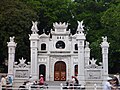
Gateway of the Quán Thánh Temple. -
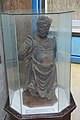
Statue of god Bắc Đế Trấn Võ (Xuanwu) in Hoian.


See also
- Chinese ancestral worship
- Chinese folk religion in Southeast Asia
- Chinese ritual mastery traditions
- Quán Thánh Temple
- Religion in Vietnam
- Temple of the Jade Mountain
- Thành hoàng
- Three teachings
References
- ^ a b «Religion in Vietnam». Archived from the original on 2013-10-27. Retrieved 2013-04-12.
- ^ Bryan S. Turner; Oscar Salemink (25 September 2014). Routledge Handbook of Religions in Asia. Routledge. pp. 240–. ISBN 978-1-317-63646-5.
- ^ Tu Anh T. Vu, 2006, p. 30
- ^ «The Daoist Appropriation/Subordination of Bạch Hạc Spirits». November 26, 2015.
- ^ «Elephant Mountain and the Erasure of Việt Indigeneity». November 21, 2015.
- Tu Anh T. Vu. Worshiping the Mother Goddess: The Dao Mau Movement in Northern Vietnam. In: Explorations in Southeast Asian Studies, vol. 6, no. 1, Spring 2006.
External links
 Media related to Taoism in Vietnam at Wikimedia Commons
 |
This Vietnam-related article is a stub. You can help Wikipedia by expanding it. |