In today’s world, Soulbound has become a topic of great relevance and interest to a large number of people in different areas of society. Whether due to its impact on culture, the environment, politics or the economy, Soulbound has managed to capture the attention of academics, professionals and the general public. In this article, we will explore different aspects related to Soulbound, its importance and its influence on various aspects of daily life. From its origins to its possible future consequences, we will take an in-depth look at the relevance of Soulbound in today’s world.
| Soulbound | |
|---|---|
 |
|
| Directed by | Caio Sóh |
| Screenplay by | Caio Sóh |
| Produced by | Luana Lobo and Bia Basilio |
| Starring | Emilio Dantas Remo Rocha Paloma Duarte |
| Cinematography | Othon Castro |
| Music by | Maycon Ananias Maria Gadú Aureo Gandur |
|
Production
company |
Lobo Filmes
|
|
Release dates
|
|
|
Running time
|
105 minutes |
| Country | Brazil |
| Language | Portuguese |
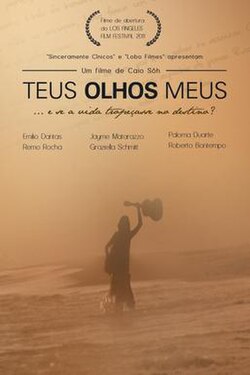
Soulbound (Portuguese: Teus Olhos Meus) is a 2011 Brazilian drama film directed and written by Caio Sóh.[1][2]
The film follows the story of Gil, a 20-year-old orphan, raised by his uncles. His lifestyle generates a family war, causing Gil to go away from home. With the guitar on his back, without money and without the help of friends, Gil meets Otávio, a music producer who changes his destiny forever.[3]
Cast
- Emilio Dantas as Gil
- Remo Rocha as Otávio
- Paloma Duarte as Tia Leila
- Roberto Bomtempo as Tio César
- Jayme Matarazzo as Otávio (aged 19)
- Graziella Schmitt as Lígia (aged 19)
- Cláudio Lins as Carlos
- Juliana Lohmann as Carla
- Gustavo Novaes as Marcelo
- Gugu Peixoto as Gugu
Also
- Lua Blanco as Taila
- Marcelo Mello as Caju
References
- ^ Hall, David. «Soulbound — Teus Olhos Meus». Gay Celluloid. Retrieved 17 September 2020.
- ^ TEUS OLHOS MEUS | 35ª Mostra Internacional de Cinema em São Paulo
- ^ Van Hoeij, Boyd (24 October 2011). «Soulbound». Variety. Retrieved 17 September 2020.
External links
 |
This article related to a Brazilian film of the 2010s is a stub. You can help Wikipedia by expanding it. |
.svg) |
This article about a drama film with a lesbian, gay, bisexual or transgender theme is a stub. You can help Wikipedia by expanding it. |