This article will address the topic of PureOS, which has generated great interest due to its relevance today. PureOS is a topic that has aroused the interest of many people in different areas, whether in the personal, academic, professional or social sphere. Over the years, PureOS has gained greater importance and relevance, generating debates, research and reflections on its impact and consequences in our society. In this sense, it is essential to analyze and understand the different aspects surrounding PureOS, from its origins to its evolution today, in order to offer a broad and complete vision of this very relevant topic.
Linux distribution
Linux distribution
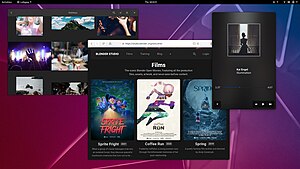
| PureOS 10.0 with GNOME | |
| Developer | Purism and community contributors |
|---|---|
| OS family | Linux (Unix-like) |
| Working state | Current |
| Source model | Open source |
| Latest release | 10.3[1] / 14 June 2023; 19 months ago (14 June 2023) |
| Repository |
|
| Kernel type | Linux kernel |
| Default user interface |
GNOME, KDE |
| License | Free software licenses (mainly GPL) |
| Official website | pureos.net  |
PureOS is a Linux distribution focusing on privacy and security, using the GNOME or KDE Plasma desktop environment.[2][3][4] It is maintained by Purism for use in the company’s Librem laptop computers as well as the Librem 5 smartphone.[5][6]
PureOS is designed to include only free software, and is included in the list of Free Linux distributions published by the Free Software Foundation.[7][8]
PureOS is a Debian-based Linux distribution, merging open-source software packages from the Debian “testing” main archive using a hybrid point release and rolling release model.[9] The default web browser in PureOS is GNOME Web.[10] The default search engine is DuckDuckGo.

See also

References
- ^ «Download Byzantium Version: PureOS 10.3 Media Size: 2 GB». 14 June 2023. Retrieved 24 July 2023.
- ^ Vaughan-Nichols, Steven (2019-03-07). «PureOS: One Linux for both PCs and smartphones». ZDNet. Archived from the original on 2019-03-25. Retrieved 2019-07-23.
- ^ Evangelho, Jason (2019-03-25). «My First 24 Hours With Purism’s Librem 15 v4 Laptop And PureOS». Forbes. Archived from the original on 2019-07-23. Retrieved 2019-07-23.
- ^ Roston, Brittany (2015-06-22). «Librem 13 laptop focuses on privacy with PureOS». SlashGear.com. Archived from the original on 2019-07-23. Retrieved 2019-07-23.
- ^ «PureOS – a pure Linux phone experience». Purism. Archived from the original on 13 August 2019. Retrieved 13 August 2019.
- ^ «Exploring the Librem 5 Free Phone». Linux Magazine. Archived from the original on 4 October 2017. Retrieved 13 August 2019.
- ^ Robertson, Donald (2017-12-21). «FSF adds PureOS to list of endorsed GNU/Linux distributions». Free Software Foundation. Archived from the original on 2019-06-22. Retrieved 2019-07-23.
- ^ «Free GNU/Linux distributions». www.gnu.org. Archived from the original on 2014-12-16. Retrieved 2019-07-23.
- ^ «PureOS Rolls On as Stable». puri.sm. 6 September 2019. Archived from the original on 2021-10-10. Retrieved 2021-10-10.
- ^ «An Epiphany regarding Purebrowser». Purism. 13 December 2019. Archived from the original on 13 June 2021. Retrieved 13 June 2021.
- ^ «Librem 5 design report #5». Purism (company). 10 May 2018. Archived from the original on 13 June 2020. Retrieved 30 May 2020.
External links
- Official website
- PureOS at DistroWatch
| Linux |
|
||||
|---|---|---|---|---|---|
| XNU | |||||
| QNX | |||||
| Microsoft Windows |
|||||
| Zircon | |||||
| FreeBSD/NetBSD | |||||
| OpenHarmony/HarmonyOS NEXT |
|
||||
| FreeRTOS |
|
||||
| Nintendo system software | |||||
| Minix 3 | |||||
| Symbian | |||||
| Other | |||||


| Mobile networks, protocols |
|
||||||
|---|---|---|---|---|---|---|---|
| General operation |
|||||||
| Mobile devices |
|
||||||
| Mobile specific software |
|
||||||
| Culture | |||||||
| Environment and health |
|||||||
| Law | |||||||


| Android |
|
||||||||||||||||
|---|---|---|---|---|---|---|---|---|---|---|---|---|---|---|---|---|---|
| Arch | |||||||||||||||||
| Debian |
|
||||||||||||||||
| Fedora |
|
||||||||||||||||
| Gentoo | |||||||||||||||||
| Mandrake | |||||||||||||||||
| Mandriva | |||||||||||||||||
| Slackware | |||||||||||||||||
| SUSE | |||||||||||||||||
| Other | |||||||||||||||||
| Discontinued |
|
||||||||||||||||