In today’s article, we are going to delve into Complications of pregnancy, a relevant topic that has captured the attention of many people in recent times. Throughout this text, we will analyze different aspects of Complications of pregnancy, from its origins to its impact on today’s society. We will immerse ourselves in its history, explore its implications in different areas and reflect on its importance in the current context. Complications of pregnancy is an exciting topic that deserves to be addressed from different perspectives, which is why in this article we aim to offer a broad and enriching vision of this matter. Join us on this fascinating exploration!
Medical condition
| Complications of pregnancy | |
|---|---|
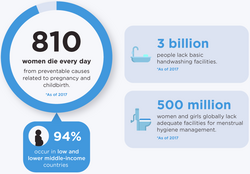
| 810 women die every day from preventable causes related to pregnancy and childbirth. 94% occur in low and lower-middle-income countries. | |
| Specialty | Obstetrics |
| Complications | Numerous biological and environmental complications |
| Risk factors | Numerous biological and environmental conditions |
Complications of pregnancy are health problems that are related to or arise during pregnancy. Complications that occur primarily during childbirth are termed obstetric labor complications, and problems that occur primarily after childbirth are termed puerperal disorders. While some complications improve or are fully resolved after pregnancy, some may lead to lasting effects, morbidity, or in the most severe cases, maternal or fetal mortality.[1][2][3]
Common complications of pregnancy include anemia, gestational diabetes, infections, gestational hypertension, and pre-eclampsia.[4][5] Presence of these types of complications can have implications on monitoring lab work, imaging, and medical management during pregnancy.[4]
Severe complications of pregnancy, childbirth, and the puerperium are present in 1.6% of mothers in the US,[6] and in 1.5% of mothers in Canada.[7] In the immediate postpartum period (puerperium), 87% to 94% of women report at least one health problem.[8][9] Long-term health problems (persisting after six months postpartum) are reported by 31% of women.[10]
In 2016, complications of pregnancy, childbirth, and the puerperium resulted in 230,600 deaths globally, down from 377,000 deaths in 1990. The most common causes of maternal mortality are maternal bleeding, postpartum infections including sepsis, hypertensive diseases of pregnancy, obstructed labor, and unsafe abortion.[11][12]
Complications of pregnancy can sometimes arise from abnormally severe presentations of symptoms and discomforts of pregnancy, which usually do not significantly interfere with activities of daily living or pose any significant threat to the health of the birthing person or fetus. For example, morning sickness is a fairly common mild symptom of pregnancy that generally resolves in the second trimester, but hyperemesis gravidarum is a severe form of this symptom that sometimes requires medical intervention to prevent electrolyte imbalance from severe vomiting.
Maternal problems
The following problems originate in the mother, however, they may have serious consequences for the fetus as well.
Gestational diabetes
Gestational diabetes is when a woman, without a previous diagnosis of diabetes, develops high blood sugar levels during pregnancy.[13][14] There are many non-modifiable and modifiable risk factors that lead to the development of this complication. Non-modifiable risk factors include a family history of diabetes, advanced maternal age, and ethnicity. Modifiable risk factors include maternal obesity.[14] There is an elevated demand for insulin during pregnancy which leads to increased insulin production from pancreatic beta cells. The elevated demand results from increased maternal calorie intake, weight gain, and increased prolactin and growth hormone production. Gestational diabetes increases the risk for further maternal and fetal complications such as the development of pre-eclampsia, the need for cesarean delivery, preterm delivery, polyhydramnios, macrosomia, shoulder dystocia, fetal hypoglycemia, hyperbilirubinemia, and admission into the neonatal intensive care unit. The increased risk is correlated with how well the gestational diabetes is controlled during pregnancy, with poor control associated with worsened outcomes. A multidisciplinary approach is used to treat gestational diabetes. It involves monitoring blood-glucose levels, nutritional and dietary modifications, lifestyle changes such as increasing physical activity, maternal weight management, and medication such as insulin.[14]
Hyperemesis gravidarum
Hyperemesis gravidarum is the presence of severe and persistent vomiting, causing dehydration and weight loss. It is similar, although more severe than the common morning sickness.[15][16] It is estimated to affect 0.3–3.6% of pregnant women and is the greatest contributor to hospitalizations under 20 weeks of gestation. Most often, nausea and vomiting symptoms during pregnancy are resolved in the first trimester; however, some continue to experience symptoms. Hyperemesis gravidarum is diagnosed by the following criteria: greater than 3 vomiting episodes per day, ketonuria, and weight loss of more than 3 kg or 5% of body weight. Several non-modifiable and modifiable risk factors predispose women to the development of this condition, such as a female fetus, psychiatric illness history, high or low BMI pre-pregnancy, young age, African American or Asian ethnicity, type I diabetes, multiple pregnancies, and a history of pregnancy affected by hyperemesis gravidarum. There are currently no known mechanisms for the cause of this condition. This complication can cause nutritional deficiency, low pregnancy weight gain, dehydration, and vitamin, electrolyte, and acid-based disturbances in the mother. It has been shown to cause low birth weight, small size for gestational age, preterm birth, and poor APGAR scores in the infant. Treatments for this condition focus on preventing harm to the fetus while improving symptoms and commonly include fluid replacement and consumption of small, frequent, bland meals. First-line treatments include ginger and acupuncture. Second-line treatments include vitamin B6 +/- doxylamine, antihistamines, dopamine antagonists, and serotonin antagonists. Third-line treatments include corticosteroids, transdermal clonidine, and gabapentin. Treatments chosen are dependent on the severity of symptoms and response to therapies.[17]
Pelvic girdle pain
Pelvic girdle pain (PGP) disorder is pain in the area between the posterior iliac crest and gluteal fold, beginning peri or postpartum caused by instability and limitation of mobility. It is associated with pubic symphysis pain and sometimes radiation of pain down the hips and thighs. For most pregnant individuals, PGP resolves within three months following delivery, but for some, it can last for years, resulting in a reduced tolerance for weight-bearing activities. PGP affects around 45% of individuals during pregnancy: 25% report serious pain, and 8% are severely disabled.[18][19] Risk factors for complication development include multiparity, increased BMI, physically strenuous work, smoking, distress, history of back and pelvic trauma, and previous history of pelvic and lower back pain. This syndrome results from a growing uterus during pregnancy that causes increased stress on the lumbar and pelvic regions of the mother, thereby resulting in postural changes and reduced lumbopelvic muscle strength, leading to pelvic instability and pain. It is unclear whether specific hormones in pregnancy are associated with complication development. PGP can result in poor quality of life, predisposition to chronic pain syndrome, extended leave from work, and psychosocial distress. Many treatment options are available based on symptom severity. Non-invasive treatment options include activity modification, pelvic support garments, analgesia with or without short periods of bed rest, and physiotherapy to increase the strength of gluteal and adductor muscles, reducing stress on the lumbar spine. Invasive surgical management is considered a last-line treatment if all other treatment modalities have failed and symptoms are severe.[19]
High blood pressure
Main article: Hypertensive disease of pregnancy
Potential severe hypertensive states of pregnancy are mainly:
- Pre-eclampsia – gestational hypertension, proteinuria (>300 mg), and edema. Severe pre-eclampsia involves a BP over 160/110 (with additional signs). It affects 5–8% of pregnancies.[20]
- Eclampsia – seizures in a pre-eclamptic patient, affecting around 1.4% of pregnancies.[21]
- Gestational hypertension can develop after 20 weeks but has no other symptoms and may resolve itself, but it can develop into pre-eclampsia.[22]
- HELLP syndrome – Hemolytic anemia, elevated liver enzymes and a low platelet count. Incidence is reported as 0.5–0.9% of all pregnancies.[23]
- Acute fatty liver of pregnancy is sometimes included in the pre-eclamptic spectrum. It occurs in approximately one in 7,000 to one in 15,000 pregnancies.[24][25]
Women who have chronic hypertension before their pregnancy are at increased risk of complications such as premature birth, low birthweight, or stillbirth.[26] Women who have high blood pressure and had complications in their pregnancy have three times the risk of developing cardiovascular disease compared to women with normal blood pressure who had no complications in pregnancy. Monitoring pregnant women’s blood pressure can help prevent both complications and future cardiovascular diseases.[27][28]
Venous thromboembolism
Venous thromboembolism, consisting of deep vein thrombosis and pulmonary embolism, is a major risk factor for postpartum morbidity and mortality, especially in highly developed countries. A combination of pregnancy-exacerbated hypercoagulability and additional risk factors such as obesity and thrombophilias makes pregnant women vulnerable to thrombotic events[29] The prophylactic measures that include the usage of low molecular weight heparin can significantly reduce risks associated with surgery, particularly in high-risk patients. Awareness among healthcare givers and prompt response in early identification and management of venous thromboembolism during pregnancy and the postpartum period are both crucial for prompt response. Deep vein thrombosis, a form of venous thromboembolism, has an incidence of 0.5 to 7 per 1,000 pregnancies, and is the second most common cause of maternal death in developed countries after bleeding.[30]
- Caused by: Pregnancy-induced hypercoagulability as a physiological response in preparation for the potential bleeding during childbirth.[30]
- Treatment: Prophylactic treatment, e.g., with low molecular weight heparin may be indicated when additional risk factors for deep vein thrombosis are present.[30]
Anemia