In this article we will delve into Collaboration with Russia during the Russian invasion of Ukraine, a topic of great relevance and interest today. Along these lines we will explore different aspects related to Collaboration with Russia during the Russian invasion of Ukraine, with the aim of offering a deep and complete understanding of it. From its origins to its impact on today’s society, to its evolution over time, we will analyze every facet of Collaboration with Russia during the Russian invasion of Ukraine to provide our readers with an enriching and constantly evolving perspective. Through a detailed and multidisciplinary approach, we aim to offer a holistic vision that allows us to fully understand the importance and significance of Collaboration with Russia during the Russian invasion of Ukraine in the present context.
Aspect of the Russo-Ukrainian War
Since the beginning of the Russian invasion of Ukraine in February 2022, there have been numerous incidents of Ukrainians collaborating with Russia to undermine Ukraine from within. This phenomenon, which has had a significantly negative impact on the country’s aspiration and ability to recover the Russian-occupied territories, has involved both countries’ politicians, military officials and soldiers, and ordinary citizens. In response, the Ukrainian government has adopted new legislation that enables the targeting of collaborators by more specifically defining collaborationist acts and by introducing strict punishments for Ukrainians who are found to have colluded with the Russian military campaign in any capacity.
According to the BBC, by August 2024, almost 2,000 Ukrainians had been convicted of collaboration with Russia over the course of the previous two and a half years.[1] Concerns have been raised over the effects of the anti-collaboration legislation on those whose actions do not validly endanger Ukraine’s security, such as people who resort to accepting Russia’s authority in an attempt to survive and adapt daily aspects of life to the circumstances of long-term (or indefinite) military occupation; Ukraine’s methods for prosecuting collaborators have thus been classified by Human Rights Watch and the United Nations OHCHR as standing in violation of international humanitarian law.[2][3][4]
As of January 2025, approximately 20% of Ukraine’s sovereign territory, containing an estimated 3.5 million Ukrainian citizens, is occupied by Russian troops. Much of this territory—not including parts that were lost in 2014—has not been controlled by Ukraine for well over two years and was annexed by Russia in September 2022.
Legal regulation
After the Russian invasion of Ukraine on 24 February 2022, the Verkhovna Rada adopted two laws on collaborationism, which were later signed by Ukrainian President Volodymyr Zelenskyy:[5][6]
- Bill No. 5143 introduced an addition to the Criminal Code of Ukraine to Article 111-1 «Treason». According to the amendment, liability was introduced for attempts to organize elections or organize power in the territories occupied by Russia.
- Draft Law No. 5144 provides for amendments to the Criminal and Criminal Procedure Codes of Ukraine. According to the changes, the concept of «collaborationism» is introduced. Punishment is introduced for public denial of Russian armed aggression against Ukraine, support for the actions of Russia, propaganda, and the transfer of material resources.
The law on collaborationism has been discussed since the beginning of the Russian-Ukrainian war in 2014, but the Ukrainian authorities feared that too many residents of the occupied territories could fall under its action. To prosecute collaborators, articles on treason, financing of terrorism, obstruction of the lawful activities of the Armed Forces of Ukraine, etc. were used. The new law made it possible to impose punishment for the very fact of cooperation with the occupiers without the need to prove, for example, damage to the security of the state (as in the case of treason).[7]
- Public denial of the fact of armed aggression against Ukraine, occupation of its territories, denial of the extension of state sovereignty to the occupied territories.
- Calls for support of the actions of the aggressor country, support and calls for cooperation with its armed formations or the occupying authorities.
- Voluntary occupation of positions in the occupation administrations and other illegal authorities, participation in elections or referendums in the occupied territories (up to 10 years in prison)
- Propaganda in the interests of the aggressor state in educational institutions, promoting the implementation of educational standards of the standards of the aggressor country (up to 3 years in prison)
- Transfer of material resources to the Russian military and other economic cooperation (up to 5 years in prison)
- Organization and conduct of political events in support of the occupation or participation in them (up to 20 years in prison)
- Voluntary occupation of positions in law enforcement or judicial bodies formed by the occupation authorities, participation in illegal armed or paramilitary formations or assistance to them in combat operations against Ukraine (up to 15 years in prison)
- Acts as an official in illegal government bodies that caused death of people or other serious consequences (up to life imprisonment).
Depending on the corpus delicti, Article 111-1 of the Criminal Code provides for penalties of varying severity. The minimum is the deprivation of the right to hold certain positions or engage in certain activities for people holding positions in illegal government bodies that are not related to the adoption of administrative or organizational decisions, as well as for those who spoke out in support of Russia in the media and the Internet.[7] As an additional measure of punishment, confiscation of property may be applied.[8]
The Ukrainian authorities noted that they were not going to persecute people who were forced to work in the occupied territories — public utilities employees, doctors, etc. At the same time, policemen and judges who continued to work after the occupation unequivocally fall under the law.[7]
Authorities
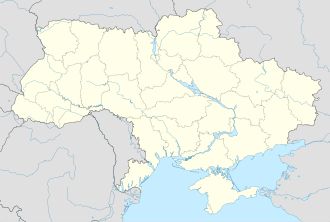
 class=notpageimage| Settlements where the head of the city or village began cooperation with the Russian authorities
Meduza journalists noted that the Russian authorities were probably acting on the basis of the notions of 2014, when the political confrontation in Ukraine allowed them to win over the elites in some regions, members of Viktor Yanukovych ‘s Party of Regions, and some grassroots movements.[9]
However, after the beginning of the invasion in February 2022, the opposite situation developed: society and political forces consolidated around the sovereignty of Ukraine. In the occupied territories, many politicians who previously spoke from pro-Russian positions refused to cooperate with the Russian military, and the occupation administrations were formed from among insignificant politicians, petty officials and random people.[9]
In February-June 2022, the Chesno movement added 47 collaborating politicians to its list: 12 in the Donetsk region, 10 in Kharkiv region, 9 in Kherson region, 8 in Zaporizhzhia region, 3 each in Luhansk and Sumy regions, 2 in Mykolaiv region. By party affiliation, most of the collaborators were members of the pro-Russian Opposition Platform — For Life (19 out of 34 members of political parties)[10]
Following the invasion, Russia began to organize military-civilian administrations in occupied territories, despite the fact that Russian President Vladimir Putin stated that Russia’s plans do not include the occupation of Ukrainian territories.[11][12]
Kherson
Main articles: Battle of Kherson and Russian occupation of Kherson Oblast

Volodymyr Saldo, the mayor of Kherson between 2002 and 2012, and a supporter of repressions against the opposition in 2014, became the head of the occupation administration of the Kherson region. In the local elections in 2020, Saldo lost to Ihor Kolykhaiev, and his party received only 7% of the vote in the regional council and 11% in the regional one. After the occupation in March 2022, Saldo became one of the founders of the collaborationist «Committee of Salvation for Peace and Order», and a month later, the Russian military seized the city council of Kherson and appointed Saldo as the head of the occupation administration.
The city administration of Kherson was headed by Oleksandr Kobets, whom the Ukrainian media called the former driver of the legally elected mayor Kolykhaiev. Other members of the Salvation Committee include Kirill Stremousov,[13] a pro-Russian far-right blogger and anti-vaxxer, who won 1.3% of the vote in the 2020 Kherson mayoral elections. Other members of the committee were associated with the movement of the oligarch, Vladimir Putin’s godfather Viktor Medvedchuk, the banned Communist Party of Ukraine and various pro-Russian organizations, had problems with the Ukrainian special services.[9]
In Kakhovka, the Russian military seized the city council on 1 April and appointed Pavel Filipchuk, a former deputy of the Kherson regional council from the pro-Russian Opposition Platform — For Life!, as the head of the city occupation administration. (OPLE), who was part of the team of the chairman of the regional council Vladislav Manger, suspected of involvement in the murder of Kherson activist Kateryna Handziuk. After a series of unsuccessful attempts to be elected mayor of Kakhovka, Filipchuk moved to Sochi and returned shortly after the invasion began. Oleg Bukhovets, an ex-deputy of the district council from the Party of Regions, was appointed head of the city’s «police». The leadership of the community noted that the employees of the city executive committee refused to cooperate with Russian appointees.[14]
On 12 March, in Henichesk, the Russian military ousted the legally elected mayor and appointed Gennady Sivak from Kramsk as the head of the occupation administration. Andriy Klochko, a deputy of the district council from the Opposition Platform For Life party, a former activist of Viktor Medvedchuk’s Ukrainian Choice organization, became the city’s chairman. Andriy Klochko, a member of the Henichesk District Council from OPZZ, was appointed «acting mayor» in Henichesk. Of the 15 headmen of the Henichesk district, only 5 went to cooperate with the Russian military.[14] Nova Kakhovka under Russian administration was headed by a small entrepreneur Vladimir Leontiev, and Skadovsk was headed by a Russian citizen Sergei Shvaiko, who previously worked as a builder.[13]
The Washington Post reported that the Ukrainian authorities after the capture of Kherson faced problems related to ambivalent attitude or even sympathy towards Russia among many residents: some of them fled the city when Russian troops retreated, reducing the human resource for rebuilding the city, while the other part stayed behind and, according to the Washington Post, it is unknown what should be done with them. Thus, according to the newspaper, some locals received Russian passports in order to receive benefits, while others received Russian wage supplements for agreeing to continue working. This situation has led to social tensions and conflicts[15]
Mykolaiv
In May 2022, the head of the Mykolaiv District Prosecutor’s Office was detained by the SBU for passing on to an unnamed Russian blogger, whose fan he was, data on captive Russian servicemen, military and civilian casualties, and passwords for moving around the region.[16][17]
Zaporizhzhia